Okay, so let me set the scene.
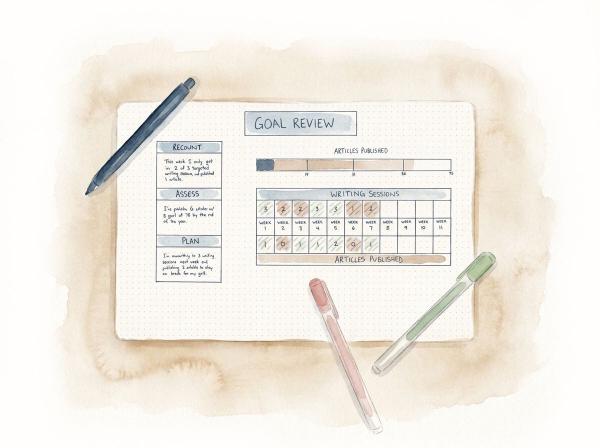
It’s Sunday night. I’ve got a candle lit, a fresh page in my planner, and three different colored pens lined up like I’m about to perform surgery instead of, you know, deciding what groceries to buy.
I spend the next 45 minutes building a color-coded, time-blocked, beautifully symmetrical plan for my week. Every hour has a job. Every task has a category. It’s genuinely a piece of art.
Monday comes.
I open the planner, admire it for a second like it’s a museum exhibit… and then don’t do a single thing on it.
Not because I’m lazy. Not because the plan was bad. But because — and this took me embarrassingly long to figure out — planning had quietly become my new way of avoiding the actual work.
This, my friend, is the planning paradox. And once you see it, you cannot unsee it.
Wait, What Exactly Is the Planning Paradox?#

Planning can be helpful, but there’s a point where it starts doing the opposite of what you need. Instead of helping you take action, it can become a comfortable substitute for actually getting started.
At first, it feels productive. You organize your tasks, adjust your schedule, and make everything look perfectly manageable. Your brain gets that satisfying feeling of progress, even though the important work is still waiting.
And that’s where things can go off track.
Instead of:
- Writing the report → You reorganize your task list for the fifth time.
- Starting the workout plan → You spend another hour comparing workout apps.
- Launching the business → You keep refining the business plan instead of taking the first step.
- Working toward the goal → You create another plan for how you’re going to work toward it.
None of these activities are completely useless. They can help you prepare and stay organized. But they aren’t the actual work.
The goal isn’t to stop planning altogether. It’s to recognize when planning has done its job and action needs to take over.
After all,
“A Plan Should Point You Toward Action, Not Keep You Planning Forever.”
And that means:
- Plan → Decide what needs to happen.
- Prioritize → Identify the most important next step.
- Act → Start before you feel completely ready.
- Adjust → Change the plan when reality calls for it.
- Repeat → Keep moving instead of constantly starting over.
The real win isn’t having the most organized plan. It’s using your plan as a bridge between knowing what you want and actually doing something about it.
5 Signs You Might Be Stuck in the Paradox#
Before you start changing your entire planning system, it helps to recognize a few signs that your current approach may be working against you. You don’t need to relate to every one of these, but if several sound familiar, it might be time to simplify.
- Multiple planning systems: You have a planner, an app, a notes document, and a collection of random sticky notes, but none of them completely match.
- Constant fresh starts: You’ve started over with a brand new planning system more than twice this year.
- Tasks that never leave: The same items have been sitting on your to-do list and rolling over for three or more weeks.
- Checklist satisfaction: Checking things off feels rewarding, even when most of the important work hasn’t been done yet.
- More talking than doing: You spend more time discussing, planning, or thinking about your goals than taking the first step toward them.
If two or more of these sound familiar, don’t worry. It doesn’t mean you’re bad at planning. It may simply mean your system has become more complicated than it needs to be.
The good news is that you don’t need another fancy planner, another productivity app, or a completely new system.
You need a planning approach that helps you move from planning to doing.
Why This Happens (It’s Not a “You” Problem)#
This isn’t a discipline issue, and it’s definitely not a “you’re just not trying hard enough” issue. There’s actual psychology behind it.
1. The Illusion of Control#

A plan can make you feel like the outcome is already under control, even before you have taken any real action. It gives your brain a sense of completion simply because the steps are written down.
That can create a false sense of progress.
The plan is sitting there, everything looks organized, and you know what you intend to do. But nothing has actually changed yet.
Your brain sees:
The goal is written down.
The steps are organized.
The next move seems clear.
And because everything feels settled, your brain can relax before the real work even begins.
The problem is that planning can feel like progress without actually being progress.
2. The Planning Fallacy#
When you sit down to plan your week, don’t start by asking yourself how much you can fit into it.
Start by asking:
“How long will each task realistically take?”
Don’t assume everything will go exactly according to plan. Think about how long similar tasks have taken you in the past and leave some room for unexpected delays.
The best way to do this is to build your schedule around realistic time estimates rather than optimistic guesses.
- Estimate how long each important task will actually take.
- Add some extra time for interruptions, delays, or tasks that run over.
If your schedule starts looking too full, move lower-priority tasks instead of squeezing everything into the same day.
That’s how you create a plan that works in the real world, not just one that looks perfect on paper.
You’re giving yourself enough structure to stay on track without setting yourself up for a schedule that falls apart the moment something takes longer than expected.
3. Productive Procrastination#
Feeling stuck with your planning routine? Well, it can be easy to mistake planning for progress, especially when the plan looks polished and well organized.
Fortunately, there’s nothing wrong with using planning for inspiration or getting yourself organized. You can explore different methods, save useful ideas, and find a system that works for you.
The problem starts when planning becomes a way to avoid the work itself.
You might find yourself:
- Reworking the plan: Adjusting your schedule again instead of starting the task.
- Researching endlessly: Looking for another method, template, or productivity trick instead of taking action.
- Organizing the details: Creating perfect lists and spreadsheets while the actual work remains untouched.
- Planning the next step: Thinking about what you’ll do next without actually doing it.
Planning should make action easier, not become another task you keep polishing.
So use the plan as a starting point, but remember to customize it around what you actually need to accomplish.
Once the planning has given you enough direction, it’s time to stop organizing and start doing.
Fantasy vs. Reality: A Quick Reality Check!#
I wish someone had shown me this table years ago. Would’ve saved me a lot of pens. And now, it’s your time to make the most out of it.
Let’s understand what the difference is between the planning fantasy and the actual reality:
| The Planning Fantasy | The Actual Reality |
|---|---|
| A perfect plan guarantees a perfect outcome | Plans are a rough draft of your intentions, not a contract with the universe |
| More detail = more control | Past a point, extra detail just adds more places to get stuck |
| The plan should survive the whole week untouched | A good plan gets rewritten two or three times a week minimum |
| Planning time and doing time are basically the same thing | They are wildly different activities that use different energy |
| You need the right system before you can start | Literally any system beats no system, as long as you use it |
So How Do You Actually Break the Loop?#

Planning matters, but it should help you take action, not become another task to perfect. If you want your planning system to actually work, keep these simple rules in mind:
- Cap your planning time: Give yourself 15 to 20 minutes. When time is up, start doing.
- Choose the next action: Turn vague goals into one clear, physical step you can complete.
- Keep planning and doing separately: Don’t keep changing your plan while you’re supposed to be working.
- Let your plan get messy: Cross things out, reschedule tasks, and make changes as life happens.
- Adjust instead of restarting: Review what changed, choose the next step, and keep moving forward.
- Add accountability: Tell someone what you will actually accomplish this week, then follow through.
The Real Takeaway#
Planning isn’t the villain here. It’s genuinely useful; it clarifies your thinking, it lowers the mental load of remembering everything, and it gives your week some shape instead of pure chaos.
But somewhere along the way, a lot of us started treating the plan itself as the achievement. We polish it, protect it, admire it… and quietly forget that its entire job was to get us moving, not to become a permanent art installation in a drawer.
So here’s my honest suggestion: plan just enough to know your next step, then go take it. You can always plan again tomorrow. Because honestly, the planner isn’t going anywhere.
Feature image by Volodymyr Hryshchenko on Unsplash